

Why Inventory Placement Matters More Than Shipping Speed
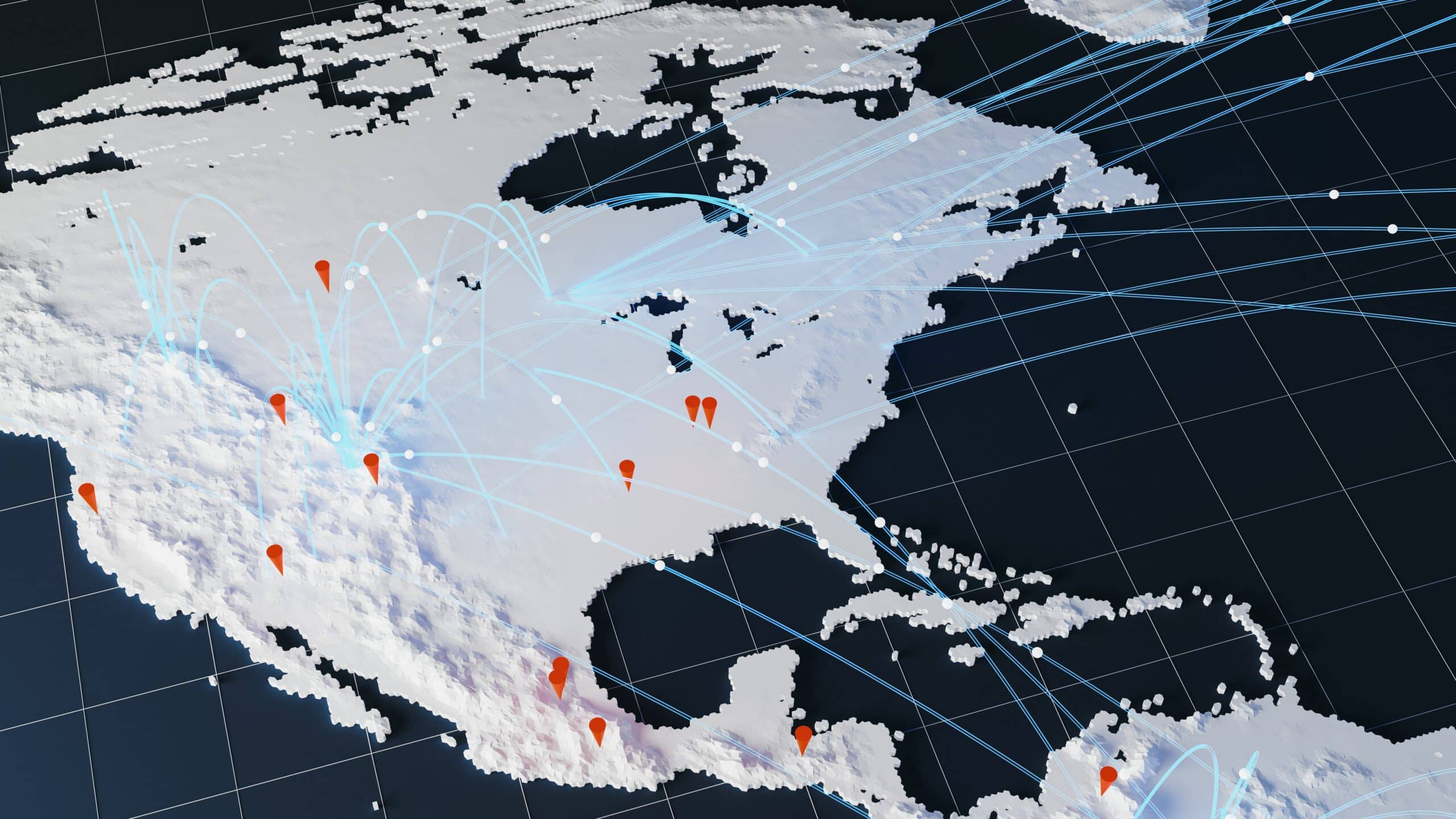
Shipping costs continue to rise, and meeting customer delivery expectations can become expensive when brands rely on expedited shipping. However, delivery performance begins before an order leaves the fulfillment center. Where inventory is located influences how far shipments travel, how quickly they arrive and how much they cost.
Inventory placement optimization helps brands evaluate where products should be stocked and how much inventory should be available at each location. For a pet food brand shipping heavy products nationwide or a supplement company experiencing growing demand across multiple regions, strategic placement can help reduce shipping distances without relying exclusively on faster carrier services.
According to AlixPartners’ 2026 Home Delivery Survey, consumers increasingly expect free delivery in less than three days. Meeting those expectations requires brands to evaluate their fulfillment network alongside their transportation strategy.
Key Takeaways
- Inventory location influences shipping costs and delivery times. Positioning products closer to customers can reduce shipping distances and improve ground transit times.
- Strategic placement can reduce reliance on expedited shipping. Brands may be able to meet delivery expectations using standard ground services when inventory is positioned appropriately.
- Reliable delivery matters as much as speed. Consistent transit times and product availability help brands deliver on customer promises and earn customer loyalty.
- More fulfillment centers aren’t always better. The right number of locations depends on order volume, customer geography, inventory requirements and total distribution costs.
- A 3PL network can support growth. Brands can expand their geographic fulfillment footprint through an established provider without building or operating their own facilities.
What Is Inventory Placement vs. Inventory Positioning?
Inventory placement refers to deciding which products or SKUs are stocked at each fulfillment center within a distribution network.
Inventory positioning refers to determining how much of each SKU should be held at those locations to meet anticipated demand.
Both decisions are part of a broader warehouse location strategy that considers the number and geographic distribution of fulfillment centers. For example, a supplement brand might stock its highest-demand products across four fulfillment centers while keeping slower-moving products at one centralized location. That’s an inventory placement decision. Determining how much of each product to stock at each location based on regional order volume is an inventory positioning decision.
As Target’s data science team explains, these decisions work together to help businesses balance inventory availability, fulfillment efficiency and delivery performance.
Why Shipping Speed Is the Wrong Place to Start
When delivery times become a concern, businesses often look first at carrier services. Faster shipping options can help meet customer expectations, but they also introduce additional costs that accumulate across every order.
The cost difference between ground and expedited services can be significant. For example, according to UPS’s 2025 Annual Report, the carrier generated an average of $11.60 per Ground package compared with $25.55 per Next Day Air package, approximately 55%. While these averages reflect different shipment profiles rather than a direct rate comparison, they highlight the financial incentive to evaluate ground delivery options.
For brands looking to control transportation expenses, the opportunity isn’t necessarily to sacrifice delivery speed. Positioning inventory closer to customers can help more orders qualify for shorter ground transit times, reducing the need to purchase expedited services to meet delivery expectations.
Consider two brands using the same carrier and ground shipping service. One ships from a fulfillment center located near its customers, while the other ships from a facility several states away. Even with identical service levels, their transportation costs and delivery times may differ significantly. Inventory placement addresses the distance a shipment needs to travel before carrier selection comes into play.
This doesn’t mean transportation optimization is any less important. Carrier relationships, rate shopping and service selection remain essential to controlling shipping costs. The strongest approach considers inventory placement and transportation together, identifying opportunities to reduce shipping distances while selecting cost-effective delivery services.
For growing brands, effective parcel shipping should balance cost, transit time and service reliability rather than relying on expedited delivery to compensate for inventory located far from customers.
How Inventory Placement Drives Cost, Speed and Reliability
Strategic inventory placement can influence several aspects of fulfillment performance, from transportation expenses to the consistency of customer delivery promises.
Shorter Shipping Distances, Lower Cost Per Order
Parcel carriers commonly use shipping zones to determine transportation rates based on the distance between a shipment’s origin and destination. As that distance increases, shipping costs and transit times generally increase as well. Positioning inventory closer to customers can reduce the average shipping zone, allowing more orders to move through lower-cost ground services.
For example, a brand distributing products nationally may initially fulfill orders from facilities in the eastern and western United States. As demand increases in other regions, adding strategically located fulfillment centers can help shorten shipping distances and improve delivery performance.
This was reflected in a FIDELITONE client’s expansion from two fulfillment locations to four. As the network grew, the client’s average shipping zone decreased from 4.04 to 3.50, while average transit time improved from 2.09 days to 1.41 days. The client also achieved a 6% reduction in average shipping cost per package.
The expansion was complemented by additional regional carrier options, demonstrating how inventory placement and transportation optimization can work together to improve shipping performance.
Less Reliance on Expedited Shipping
Expedited services can help brands meet tight delivery windows, but paying for faster transportation on a recurring basis can become expensive.
When inventory is strategically positioned, more customers may be reached within one or two days using standard ground service, depending on the fulfillment location, destination and carrier. This allows brands to build faster delivery capabilities into their fulfillment strategy rather than repeatedly paying for premium shipping services.
Fewer Split Shipments
Split shipments occur when an order must be fulfilled from multiple locations because all required products aren’t available at one fulfillment center. This can increase transportation costs, packaging requirements and operational handling while creating a less consistent delivery experience for customers.
Evaluating which products are frequently purchased together can help brands determine where inventory should be stocked. Keeping commonly paired items available at the same fulfillment location can reduce unnecessary split shipments.
For brands offering bundles or promotional packages, kitting and assembly services can also support more efficient order fulfillment.
More Reliable Delivery Promises
Customers increasingly expect accurate delivery estimates and consistent service, whether they’re ordering directly from a brand or purchasing through a marketplace.
Inventory placement can support these expectations by shortening transit distances and helping brands establish more predictable ground delivery timelines. However, reliability also depends on inventory availability, order accuracy and transportation execution. A product located near the customer provides little benefit if it isn’t available when the order is placed.
Greater Resilience to Disruption
Distributed inventory can also provide additional flexibility when disruptions affect a particular region. Weather events, carrier interruptions or operational challenges may limit fulfillment capabilities at one location. Having inventory available elsewhere in the network can create opportunities to continue processing orders, provided the necessary inventory and routing capabilities are available. This reinforces the importance of evaluating fulfillment network decisions beyond transportation costs alone.
As discussed in why supply chain resilience is outperforming low-cost strategies, businesses must consider how their supply chains respond when normal operations are disrupted.
Distributed Inventory: Why More Warehouses Isn’t the Same as Better Placement
Distributed inventory involves storing products across multiple fulfillment centers in different geographic regions. While this approach can shorten shipping distances and improve delivery performance, adding locations isn’t automatically the right decision for every brand.
A smaller business may not have enough order volume to justify distributing inventory across several fulfillment centers. In these situations, a centrally located facility, such as one in Illinois or Tennessee, may provide a practical balance between national coverage, shipping costs and inventory management. As brands grow, additional fulfillment locations may become beneficial, particularly when demand increases in regions that are expensive or time-consuming to serve from the existing network.
Determining the right number of fulfillment locations requires balancing transportation savings and delivery performance against the additional costs of distributing inventory. FIDELITONE’s Customer Solutions Group (CSG) helps brands evaluate these trade-offs based on order volume, customer demand and fulfillment requirements.
For some businesses, this analysis may reveal that a single fulfillment center remains the most cost-effective option. For others, distributing inventory across multiple regions may present opportunities to reduce transportation costs and improve transit times.
Distributing inventory also introduces several operational considerations:
Inventory carrying costs: Maintaining products across multiple locations may increase total inventory requirements.
Replenishment expenses: Products must be transported and replenished across the network.
SKU allocation: Brands must determine which products should be stocked at each location.
Operational requirements: Certain products may require specialized storage, handling, lot tracking or expiration management.
Inventory distribution also doesn’t have to follow the same approach for every brand. Some businesses stock their full product assortment across every fulfillment center. Others may distribute high-demand SKUs while keeping slower-moving products centralized.
Replenishment is another important consideration. For example, one FIDELITONE client uses a primary fulfillment location to replenish its western operation through bulk shipments, while certain products ship directly to the western facility. Although this adds inbound transportation costs, positioning products closer to their destinations can reduce outbound shipping expenses. The goal is to evaluate total inventory and transportation costs rather than focusing exclusively on parcel rates.
Through an established 3PL network, brands can access distributed order fulfillment services without needing to build or operate their own warehouses.
How Inventory Placement Fits Into Inventory Optimization
Inventory optimization often focuses on maintaining appropriate stock levels, forecasting demand and determining when products should be replenished. However, where inventory is stored is equally important. A brand may have sufficient inventory across its network but still experience fulfillment challenges if those products aren’t positioned where orders are being placed. Effective inventory optimization should account for regional demand patterns, product sales velocity, replenishment requirements and the costs associated with moving inventory between locations.
These considerations can change over time. Seasonal demand, product launches, new sales channels and geographic expansion may all influence where inventory should be positioned. For example, a brand experiencing increased demand in the western United States may benefit from reevaluating how much inventory is allocated to its western fulfillment center. Similarly, a product with declining demand may no longer justify being stocked across every location. Regular reviews of inventory performance, supported by accurate data and 3PL inventory management, can help businesses adjust their placement strategies as needs change.
Signs Your Inventory Placement Is Costing You
Inventory placement decisions should be reevaluated as order patterns, transportation costs and customer expectations change.
Warning Signs to Look Out For
Consider reviewing your inventory placement strategy if your business is experiencing:
- A high percentage of orders shipping to distant zones, particularly Zones 6–8.
- Frequent use of expedited or air shipping to meet standard delivery expectations.
- Increasing split shipments because products aren’t available at the same location.
- Stockouts that require emergency transfers between fulfillment centers.
- Inconsistent delivery performance across geographic regions.
- Rising cost per order despite negotiated carrier discounts.
- Retail compliance challenges, including missed on-time, in-full (OTIF) requirements or chargebacks.
- Growing order volume in regions that are far from existing fulfillment locations.
Key Metrics to Track
Monitoring the following metrics can help identify opportunities for improvement:
| Metric | What it helps evaluate |
| Average shipping zone | How far orders travel from fulfillment locations |
| Percentage delivered in 1–2 days by ground | Ground shipping performance across the network |
| Split shipment rate | How frequently orders require multiple shipments |
| Cost per order | Overall fulfillment and transportation efficiency |
| On-time delivery rate | Consistency of delivery performance |
| Fill rate by location | Inventory availability at individual facilities |
| Inventory turns | How efficiently inventory moves through the network |
No single metric determines whether a brand needs additional fulfillment locations. The decision should reflect the relationship between customer demand, inventory costs, transportation expenses and service requirements.
Inventory Placement for B2B and Retail Channels
Inventory placement matters beyond direct-to-consumer eCommerce. Brands shipping to retailers, distributors and other business locations must also consider how inventory positioning affects replenishment schedules, transportation costs and product availability.
Retail and wholesale shipments may involve specific routing requirements, delivery appointments and on-time, in-full performance expectations. Positioning inventory appropriately can help businesses meet those requirements while reducing unnecessary transportation distances.
For example, a FIDELITONE client supporting a nationwide network of service locations expanded from one fulfillment center to two as its geographic footprint grew. The additional western location helped support consistent replenishment schedules while reducing the distance individual orders needed to travel. For businesses relying on regular deliveries of parts or supplies, having products available when needed can directly affect their ability to serve customers.
Brands managing multiple sales channels may also benefit from shared inventory that supports DTC, retail and wholesale orders. Through omnichannel fulfillment, businesses can coordinate inventory and order execution across channels while accounting for their different fulfillment and compliance requirements.
Warehouse Location Strategy: How to Build an Inventory Placement Plan
Developing an effective inventory placement strategy begins with evaluating where demand exists and how fulfillment locations can support that demand cost-effectively.
Network analysis can help brands make informed fulfillment decisions using actual shipment data rather than assumptions. FIDELITONE’s Customer Solutions Group (CSG) uses center of gravity analysis to identify potential fulfillment locations based on where customer demand is concentrated. For brands considering multiple facilities, Greenfield and Brownfield analyses help evaluate different network configurations based on transportation costs, delivery speed and shipping distances.
These analyses consider data such as customer destination ZIP codes, shipment volume, package weights and dimensions, service requirements, seasonal demand and growth forecasts. Using supply chain optimization software, including Magnitude and Cosmic Frog, CSG can compare scenarios to help determine whether a single fulfillment center or multiple regional locations would better support a brand’s distribution needs.
For example, when an existing FIDELITONE client considered adding a fourth fulfillment location, CSG analyzed its current network and customer shipment data with the goal of improving delivery speed. The analysis identified the Northeast as an opportunity to reduce average transit times, helping inform the decision to add a fulfillment center in New Jersey.
With this type of analysis supporting the decision-making process, brands can build an inventory placement plan around several key steps:
- Map customer demand. Review historical orders by ZIP code or region to identify where shipments are concentrated and where demand is growing.
- Classify products by sales velocity. Identify high-demand SKUs and slower-moving products to determine which may benefit from broader distribution.
- Compare location and transportation options. Evaluate shipping zones, transit times, carrier costs and the potential benefits of different fulfillment center locations.
- Determine SKU placement. Decide which products should be available across multiple locations and which may be more cost-effective to keep centralized.
- Establish inventory and replenishment requirements. Determine appropriate stock levels at each location while considering inbound freight, replenishment frequency and inventory carrying costs.
- Evaluate order routing requirements. Consider how orders will be assigned to fulfillment locations based on inventory availability, customer destination and service requirements.
- Review the strategy regularly. Reassess inventory placement as customer demand, order volume, product assortments and sales channels change, particularly before peak periods.
How FIDELITONE Helps Brands Place Inventory Where It Performs
The right inventory placement strategy looks different for every business. A growing brand may benefit from a single centrally located fulfillment center, while a company serving customers nationwide may need inventory distributed across multiple regions. The challenge is determining which approach provides the right balance of shipping costs, delivery performance and inventory availability.
FIDELITONE works closely with clients to evaluate these considerations and support distribution strategies that align with their business needs. Through our network of strategically located fulfillment centers in markets including Reno, Chicago, Nashville and Bridgeport, New Jersey, brands can adjust their fulfillment footprint as order volumes and geographic demand change. Our network can reach 98% of the U.S. population within one or two days by ground shipping, depending on inventory placement and service requirements.
But having inventory in the right locations is only part of the equation. Maintaining accurate inventory records, coordinating replenishment and managing transportation are equally important to making a distributed fulfillment strategy successful. FIDELITONE combines warehouse operations, inventory visibility through FIDELITONEView and transportation management capabilities to help clients monitor performance and respond as their needs evolve.

Whether a brand is evaluating its first fulfillment location or considering additional regional facilities, FIDELITONE provides the fulfillment infrastructure, operational expertise and ongoing support to help clients put their inventory placement strategies into practice.
Ready to evaluate your inventory placement strategy? Talk to a FIDELITONE expert to discuss your fulfillment and transportation needs.
Frequently Asked Questions About Inventory Placement
What is inventory placement optimization?
Inventory placement optimization is the process of determining which products should be stocked at each fulfillment center and how inventory should be distributed based on customer demand. The goal is to balance product availability, shipping costs and delivery performance while considering the operational expenses associated with maintaining inventory across different locations.
What is inventory positioning?
Inventory positioning determines how much of each product should be held at individual fulfillment locations. It complements inventory placement, which determines where specific products are stocked. Together, these decisions help businesses maintain appropriate inventory levels near customer demand while accounting for replenishment requirements and inventory carrying costs.
What is distributed inventory?
Distributed inventory refers to storing products across multiple fulfillment centers in different geographic regions. This approach can shorten shipping distances, reduce transportation expenses and support faster ground delivery. However, it also requires businesses to consider additional inventory carrying costs, replenishment expenses and operational requirements.
How does inventory placement affect shipping costs?
Inventory placement influences the distance products travel before reaching customers. Positioning inventory closer to demand can reduce shipping zones and transportation costs while limiting the need for expedited services. Effective SKU allocation can also help reduce split shipments and the additional expenses associated with fulfilling orders from multiple locations.
When should a brand use multiple fulfillment centers?
Multiple fulfillment centers may make sense when growing order volume, geographic demand or delivery expectations justify expanding beyond a single location. Brands should compare potential transportation savings and service improvements against additional inventory and replenishment costs. The right number of locations depends on the business’s products, customers and operating requirements.
FIDELITONE helps you earn customers’ loyalty through specialized services in inbound logistics, order fulfillment, last mile delivery and service parts management.
Newsletter Sign Up
Recent Posts
-
Why Inventory Placement Matters More Than Shipping Speed
Shipping costs continue to rise, and meeting customer delivery expectations can become expensive when brands…
-
How Customer Expectations Are Shaping Big-and-Bulky Delivery in 2027
For customers purchasing furniture, appliances and other large products, delivery is more than the final…
-
The Fulfillment Infrastructure Needed to Support Omnichannel Growth
Expanding into new sales channels creates opportunities for brands to reach more customers, but it…
Are you interested in order fulfillment or last mile delivery services? Consult with a FIDELITONE expert to discuss how we can help.